
How to Verify a VAT Number
Step 1
Visit the official UK VAT registration page.
Step 2
Enter the VAT number you want to check.
Step 3
Review the verification results.
Step 4
Contact HMRC for any discrepancies.
Value Added Tax, commonly known as VAT, plays a central role in the UK tax system. Businesses that are VAT-registered must charge VAT on eligible goods and services and report this to HM Revenue and Customs. Whether you are a business owner, accountant, or customer, there are many situations where you may need to check if a VAT number is valid. This article explains what a UK VAT number is, why verification matters, and how to check one accurately.
What is a UK VAT number?
A UK VAT number is a unique identifier issued by HM Revenue and Customs to businesses that are registered for VAT. It usually consists of the prefix “GB” followed by nine digits. Some organisations, such as government departments or health authorities, may have slightly different formats.
A valid VAT number confirms that a business is authorised to charge VAT and reclaim VAT on purchases, subject to HMRC rules.
Why checking a VAT number Is important?
Verifying a VAT number is not just good practice. In many cases, it is a legal and financial necessity.
For businesses, checking VAT numbers helps ensure that VAT charged on invoices is legitimate and reclaimable. Claiming VAT from an unregistered or invalid supplier can lead to penalties or rejected claims during an HMRC audit.
For customers, especially those dealing with higher-value transactions, VAT verification provides reassurance that the business is properly registered and operating within the tax system.
How to check a
VAT number in the UK?
The most reliable way to check a UK VAT number is through official government and EU-recognised systems.
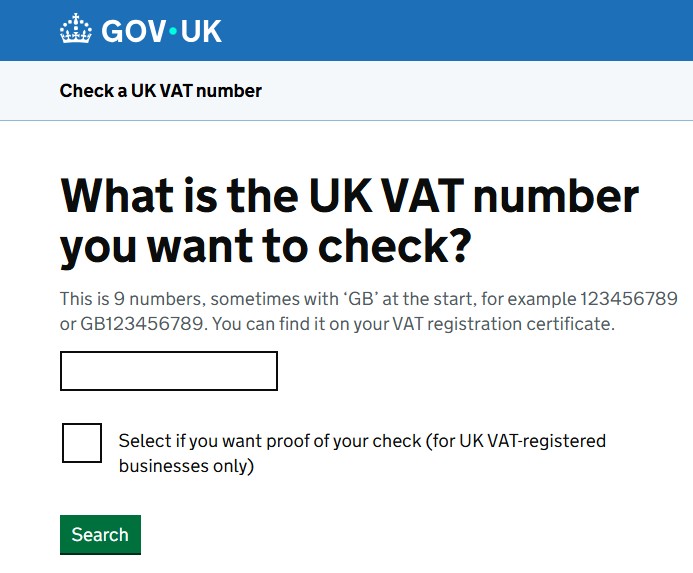
Use the HM Revenue & Customs (HMRC) VAT Checker
HM Revenue and Customs provides a free online service to confirm whether a UK VAT number is valid. The checker will tell you whether the number is recognised and display the registered business name and address.
To use the service:
- Visit the HMRC VAT number checker page on the UK government website.
- Enter the VAT number, including the GB prefix if prompted.
- Submit the search to view the results.
If the details shown match the business you are dealing with, the VAT number is valid.
Use the VIES (VAT Information Exchange System) for EU transactions
If you are checking a UK VAT number in the context of trade with EU businesses, you can also use the VAT Information Exchange System, known as VIES. This system allows you to validate VAT numbers across EU member states and the UK for cross-border transactions.
The VIES checker confirms validity and provides a record of your check, which can be useful for compliance purposes.
What to do if a VAT number is invalid?
If a VAT number does not appear as valid, there are several possible explanations. The number may have been entered incorrectly, the business may not be VAT-registered, or the registration may have been cancelled or suspended.
In such cases, you should:
- Double-check the number for errors
- Ask the supplier or business to confirm their VAT details
- Avoid reclaiming VAT until the number is verified
Proceeding without clarification can expose your business to financial and compliance risks.
Keeping records of VAT checks
HMRC recommends keeping evidence of VAT number checks, especially for significant or recurring transactions. Screenshots or downloaded confirmations from the HMRC or VIES systems can serve as proof that reasonable checks were carried out at the time of the transaction.
Checking a VAT number in the UK is a straightforward process, but it plays an important role in protecting businesses from errors, fraud, and compliance issues. By using official tools provided by HMRC and recognised international systems, you can ensure that VAT charged or reclaimed is legitimate and properly documented.
Making VAT verification a routine part of your financial processes helps maintain accuracy, transparency, and confidence in your business dealings.